

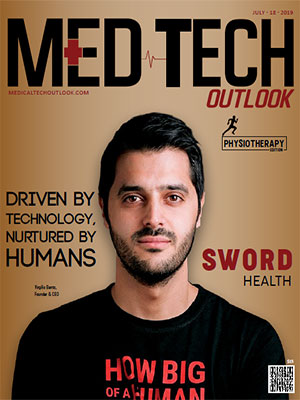

Any damage to a person’s exoskeleton can prove to have a very strong impact in their day-to-day life. While medication and surgery can fix such damages, it is important to exercise the muscles properly to make sure that the patient’s mobility is not restricted, or worse, diminished. “Physiotherapy” is the answer to the problem. However, the nuances involved in physiotherapy takes skills that take years to learn, to know each muscle fiber and bone. Against this backdrop, technology has grown by leaps and bounds in empowering physiotherapists and orthopedic surgeons help their patients better.
Innovations, such as photobiomodulation therapy, use different wavelengths of light to help reduce pain and inflammation in the affected parts, and in parallel, stimulate cell repair in the exoskeleton. Being a drug-free and non-intrusive treatment, the possibility of risk or side effects is nearly zero. Taking this further, many physiotherapists are using infrared and red lights to suit different levels of treatment requirements. In the event of a stroke or as a result of aging, an individual may be forced to be in a position to depend on a personal assistant or external support that compensate for walking ability. To support patients with such problems, technological blue-sky thinkers have developed a wearable intelligent exoskeleton that gets soft and stiff as and when required by the user. These exoskeletons not only help in supporting the patient’s walking, but also monitor the progress of muscle movement.
While this proves highly advantageous after an injury, the immediate first aid provided to the patient at the time of injury is vital. For that, organizations in the market have crafted muscle and joint supporting systems that can help not only reduce swelling and prevent re-injury but prevent injury and enhance sports performance overall. In addition to these, to support injured persons cope with their wounds and support easier movement, researchers have created a motion-sensing fabric. While the previously existing technology to monitor movement was bulky, rigid and expensive, with poor sensitivity, the newer version fixes all the shortcomings. The ability to monitor the movement of an injured joint can expedite the healing process and minimize the possibility to further injuries while giving the clinicians updates if the treatment is effective.
That being said, the intensity of injuries can vary from person to person, and sometimes, surgery is unavoidable to help the patient function normally again. In such situations, the use of continuous passive motion devices in post-operative helps track the patient progress based on muscle utilization and frequency. Today, this can be monitored and controlled from a mobile device also.
Amidst this burgeoning healthcare landscape, MedTech Outlook’s distinguished panel comprising of CEOs, CIOs, VCs, industry analysts along with its editorial board have reviewed the top physiotherapy solution providers and shortlisted the ones spearheading the charge toward fulfilling the urgent demands of the industry. The listing offers a look at how these solutions are put to use, thereby enabling healthcare practitioners to gain comprehensive knowledge and expertise.
We present to you MedTech Outlook’s “Top 10 Physiotherapy Solution Providers – 2019.”